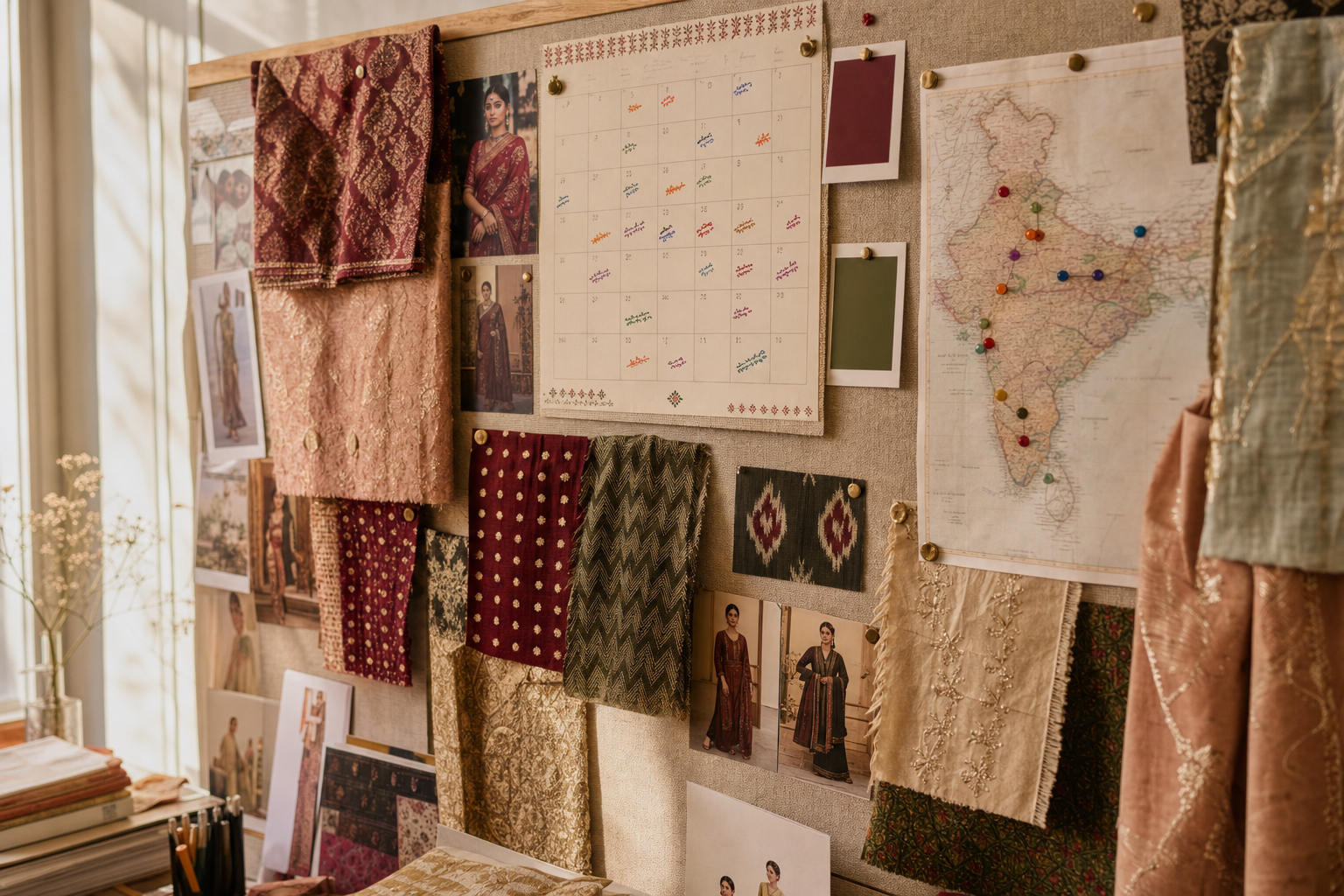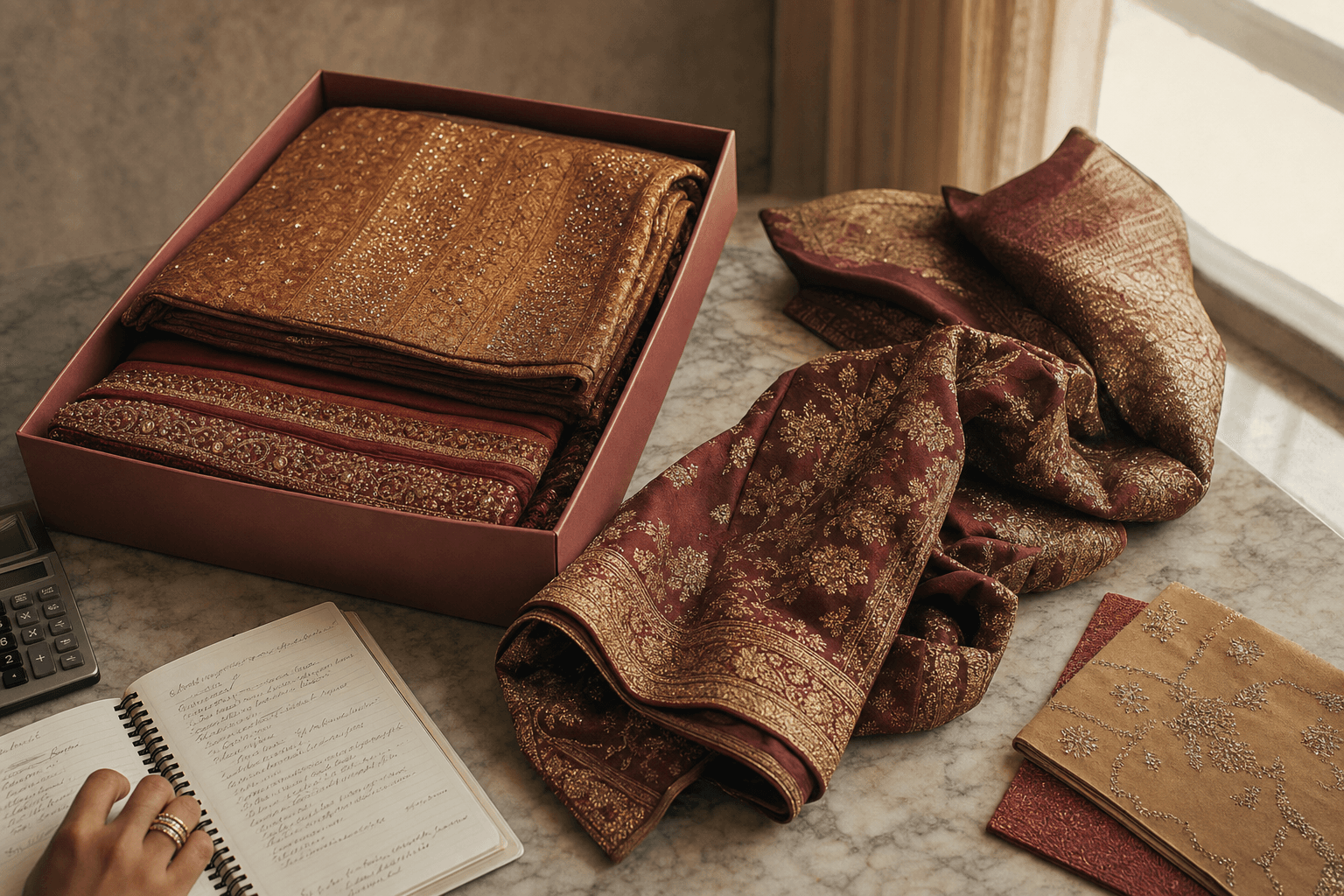
I am going to tell you about a quarter I would rather not remember.
It was bridal capsule, monsoon 2023. I was twelve years into the job — long enough to have stopped being scared, short enough not to have learned the lesson I was about to learn. The brief from the founder was simple. Bridal is the highest-margin window we have. Go deep on zari.
I went deep on zari. We marked down at fifty-five percent in February. The dead stock report ran to four pages. I sat in the warehouse the morning after the sale closed and counted the unsold pieces by hand because I did not trust the spreadsheet. I trust the spreadsheet now. I learned to.
This is the story of what I did wrong, and — more honestly — what the tool I had at the time could not show me. The tool was a Google Sheet. The MAPE on my own forecasts that quarter was forty-seven percent. I did not know it was forty-seven percent. The sheet did not tell me. The sheet does not score itself.
The confidence
In May 2023 I had a feeling about zari. I had spent six weeks looking at the runway. Sabyasachi had loaded zari heavily for his Couture 23 collection. Anita Dongre's bridal pre-launch had a zari-on-tussar that the trade press had photographed for a week. Two of our larger competitors were building bridal capsules around heavy zari work. I had spent an afternoon in Chandni Chowk talking to two cluster suppliers in Banaras who told me their order books were full through August.
Every signal I respected was pointing at the same thing. Zari is going to move.
I built the buy plan around that conviction. We placed orders for eight hundred units across four bridal silhouettes — anarkali, lehenga set, sharara, and a heavy dupatta — all with substantial zari work. The unit cost on bridal is not small. We were committing nearly thirty lakhs to a single attribute conviction.
The founder asked me, in the meeting where we approved the buy, how confident I was. I said ninety percent. I did not have a model that could tell me what ninety percent meant.
The signal I ignored
There was a signal I ignored. It was not a runway signal — the runway signal was unambiguous. It was a calendar signal. Bridal in monsoon 2023 had two challenges I did not weight properly.
The first was that the wedding-season opening in 2023 was three weeks later than 2022. Monsoon 2023 ran long; the auspicious dates that begin the wedding-guest buying cycle clustered later in August than the prior year. By the time the buying cycle opened, my bridal capsule had been on the floor for six weeks. The early-buyers had moved to lighter work because the heat was still in the air.
The second was that the wedding-guest sub-segment — which is two-thirds of bridal volume for a brand of our size — was rotating away from heavy zari toward lighter mukaish and gota work. Mukaish is cooler in the hand, easier to maintain, and reads as more current to the under-thirty wedding guest. The runway was telling one story; the wedding-guest market was telling a different one.
I had data that hinted at this. Our own sales from the previous year showed mukaish-heavy bridal pieces sold through faster than zari-heavy ones at the same price point. I did not look at it. I was looking at the runway.
The forecast I should have built — and the forecast I would build today — would have told me two things.
One: the prediction interval for zari demand in monsoon 2023 was wide. Wider than I felt it was. The runway signal was strong but the calendar signal was contrary, and a calibrated model would have shown me the disagreement as a wide interval rather than a point estimate.
Two: the depth I was committing to put me well outside the upper bound of even the optimistic case. Eight hundred units was a bet. It was not a forecast.
“The runway signal was strong. The calendar signal was contrary. A calibrated model would have shown the disagreement as a wide interval, not a point estimate.
”
The markdown
By December the writing was on the wall. We were sitting on five hundred and ninety unsold units of bridal — over seventy percent of the original buy. The wedding-guest pieces had moved; the bridal core had not. We pulled the trigger on EOSS markdown in early February. Fifty-five percent off across the bridal capsule. Nearly twenty lakhs in margin gone.
The founder did not blame me. The founder is one of the kindest people I have worked for and she said these things happen, we will learn, do not let it eat you. It did eat me. It still does, a little. The bigger waste was not the twenty lakhs — though the twenty lakhs was real. The bigger waste was that I had committed to a number I had no honest way to verify, and the system around me had no way to push back.
I do not blame the spreadsheet. The spreadsheet did exactly what spreadsheets do. It added up the numbers I gave it. It did not score itself, because spreadsheets do not score themselves. It did not tell me my last four bridal forecasts had a MAPE of forty-seven percent, because that requires a feedback loop and feedback loops do not live in cells.
What I would do differently now
The platform I work in now — and I am being deliberately honest about this — has changed how I think about a buy of this size. Three things in particular.
First, every forecast comes with a calibrated prediction interval. When the model is confident, the interval is tight. When the model is uncertain, the interval is wide. I no longer make commitments outside the upper bound of the interval without flagging the bet to the founder explicitly.
Second, the system tells me my own track record. The MAPE on my last four bridal forecasts is visible to me. So is the WAPE. So is the breakdown by category — where I am calibrated, where I am over-confident, where I am under-confident. I have a much better feel now for which categories to trust my instinct on and which to lean on the model.
Third, the depth-of-buy maths is no longer mine alone. The system computes a cost-optimal depth for each SKU based on stockout cost versus holding cost, then I over-rule it where I have conviction. The over-rule is logged. The over-rule is scored. Six months later I can see whether my over-rules were worth it.
I would have done the bridal capsule differently in 2023 if I had had this. I would have placed five hundred units instead of eight hundred. I would have weighted lighter mukaish work more heavily and zari less. I would have flagged to the founder that the runway signal and the calendar signal were in disagreement, and asked for a smaller commitment with an option to reorder if zari moved early.
I would not have stood in a warehouse on a Sunday morning in February counting unsold pieces by hand.
The lesson
I think the lesson is not trust the model over your instinct. The lesson is make the model and your instinct argue with each other. When they agree, go. When they disagree, the disagreement is a piece of information. The disagreement is, in fact, the most useful piece of information you will see all quarter.
A senior buyer's instinct is real. Twelve years of looking at fabric in the hand is real. But the instinct is a single sample from a noisy distribution. The model is a different sample, drawn from a different distribution, and the two together are stronger than either alone.
The buy that nearly cost us bridal would not happen now. Not because I am smarter — I am not. But because the tool I work in now has the discipline to ask me, every time I am about to commit a number, are you sure? here is what would change my mind.
That is what calibration is. That is what the spreadsheet could not give me.